
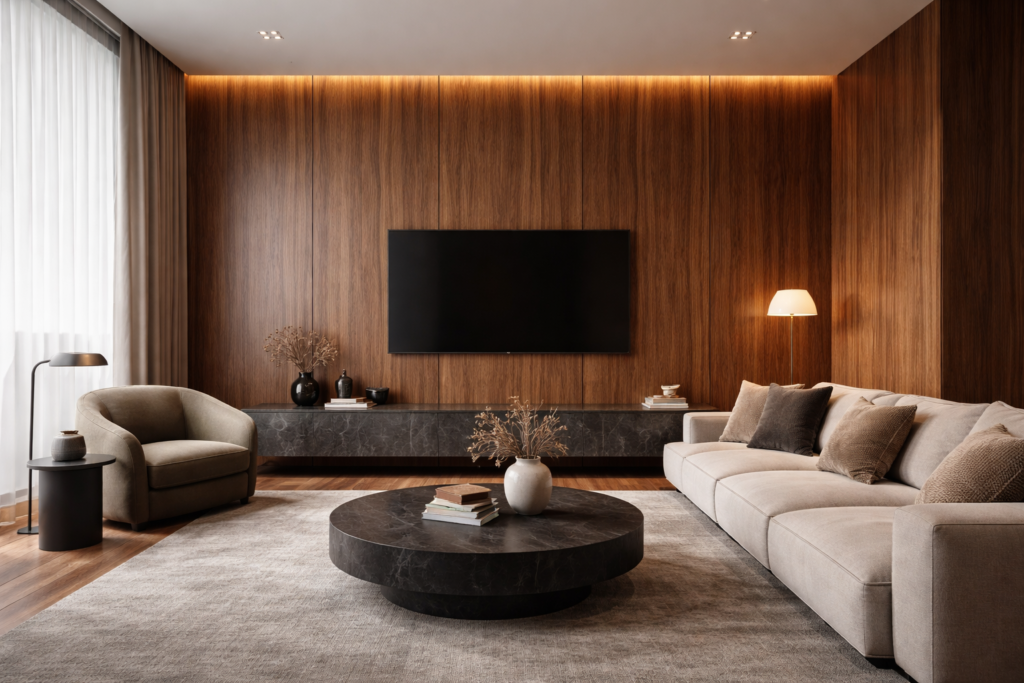
In modern interior design, achieving a balance between aesthetics, cost, and functionality is more important than ever. One solution that has gained significant popularity in recent years is real wood veneered panels. These panels offer the warmth and elegance of natural wood without the limitations often associated with solid timber. Whether used in residential or commercial spaces, they provide a versatile and refined finish that fits a wide range of styles.
What Are Real Wood Veneered Panels?
Real wood veneered panels consist of a thin layer of natural wood veneer that is bonded to a stable core material, such as MDF, plywood, or particleboard. This construction method, based on the principle of cross-laminated structure, allows the surface to showcase genuine wood grain, while the core ensures strength, stability, and resistance to warping.
Unlike laminate or printed surfaces, veneered panels use actual slices of wood, which means each panel has unique patterns and textures. This natural variation is one of their biggest advantages, as it adds authenticity and depth to interior spaces.
Aesthetic Appeal and Design Flexibility
One of the main reasons designers choose veneered panels is their visual appeal. They bring the richness of natural materials into interiors, creating a warm and inviting atmosphere. From light oak and ash to darker walnut and teak finishes, there is a wide spectrum of tones available.
These panels work equally well in minimalist, Scandinavian-inspired interiors and more classic or luxurious designs. In modern spaces, they are often used as feature walls, seamlessly covering large surfaces with a clean, continuous look. In traditional settings, they can add depth and sophistication, especially when combined with decorative moldings or contrasting materials, creating a sense of refined aesthetic cohesion.
Another advantage is the ability to control the grain direction and pattern. Designers can create vertical lines to emphasize height, horizontal layouts for a more expansive feel, or even book-matched patterns for a high-end, symmetrical effect.
Durability and Stability
Solid wood, while beautiful, can expand, contract, and sometimes warp due to changes in temperature and humidity. Veneered panels significantly reduce these issues thanks to their engineered core.
The layered construction makes them more dimensionally stable, which is particularly important in environments where climate conditions fluctuate. This stability ensures that walls remain smooth and visually consistent over time, without cracks or distortions.
Additionally, many veneered panels are finished with protective coatings that enhance resistance to scratches, stains, and everyday wear. This makes them suitable not only for living rooms and bedrooms but also for offices, hotels, and other high-traffic areas.
Sustainability Considerations
In today’s design world, sustainability is a growing concern. Veneered panels offer an eco-friendly alternative to solid wood because they use significantly less raw timber. A single log can produce a large number of veneer sheets, maximizing the use of natural resources.
When sourced responsibly, veneer production can be part of a sustainable forestry cycle. Many manufacturers also use low-emission adhesives and environmentally friendly finishes, further reducing the environmental impact.
For those who want the look of exotic or rare wood species, veneered panels provide access without the need to use large quantities of those materials, helping to preserve valuable forests.
Ease of Installation
Another practical benefit of veneered panels is their ease of installation. Compared to solid wood planks, they are lighter and more manageable, which simplifies the installation process.
They can be mounted using adhesives, clips, or mechanical fastening systems, depending on the design and application. Many modern panel systems are designed for quick and precise installation, making them a popular choice for both professional contractors and DIY enthusiasts.
Their uniform thickness and flatness also ensure a neat finish, reducing the need for extensive adjustments during installation.
Maintenance and Longevity
Maintaining veneered panels is relatively simple. Regular dusting and occasional cleaning with a damp cloth are usually enough to keep them looking fresh. Unlike painted surfaces, they do not easily show minor scuffs or wear, thanks to the natural grain pattern.
With proper care, veneered panels can last for many years without losing their visual appeal. Over time, the wood surface may even develop a subtle patina, enhancing its character and making the space feel more lived-in and authentic.
In case of damage, some panels can be lightly sanded and refinished, although this depends on the thickness of the veneer layer.
Applications in Interior Design
Real wood veneered panels are incredibly versatile and can be used in many ways:
- Feature walls: Create a focal point in living rooms or bedrooms
- Office spaces: Add warmth and professionalism to work environments
- Hallways and corridors: Improve durability in high-traffic areas
- Furniture integration: Match wall panels with cabinets and shelving for a cohesive look
- Acoustic solutions: Combine with perforations or backing materials to improve sound absorption
Their adaptability makes them suitable for both small apartments and large commercial interiors.
Cost Efficiency
While veneered panels are generally more expensive than laminates, they are significantly more affordable than solid wood. This makes them a cost-effective solution for achieving a premium look without exceeding budget constraints.
They also provide long-term value due to their durability and timeless appearance. Unlike trendy finishes that may go out of style, natural wood remains a classic choice that continues to appeal across different design eras.
Leave a Reply